
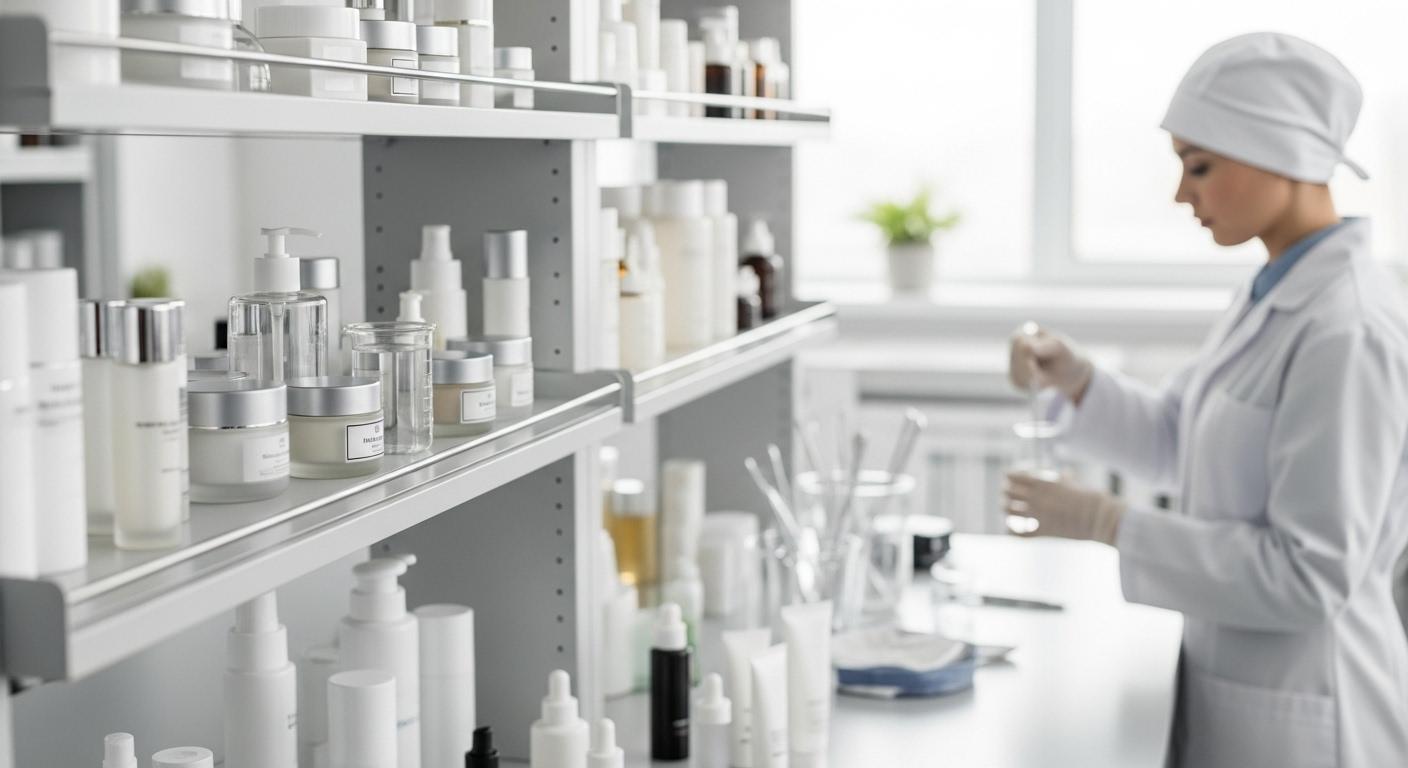
Launching your cosmetic brand no longer means endless delays, exorbitant risks, or isolation. If you want to make a mark, you will need a sharp, innovative white label cosmetics producer at your side—this is the actual shortcut in today’s beauty industry. That is the secret : quick market access, reduced costs, and a fresh chance to take on the giants are now open to you without compromise. The landscape has shifted.
The Business Opportunity Presented by a White Label Cosmetics Manufacturer
As soon as you enter a beauty store or scroll social media, you feel something has changed. Established names still stock the shelves, but new entrants fill the gaps. According to Statista, the global cosmetics sector hit $582 billion in 2025, jumping nearly 7 percent from the previous year. Those numbers say more than any marketing campaign. The rising passion for boutique and local appeal attracts fiercely loyal clients. Indie brands multiply across Instagram and TikTok, stealing attention and igniting curiosity. Some of these brands owe their lightning-quick launches to the flexible arms of a third-party cosmetics supplier. The story of Kylie Cosmetics rides this wave—a newcomer that snagged national fascination and impressive market share, relying on outside manufacturing strength without the baggage of a sprawling, in-house lab. Fenty Beauty played the same game, demonstrating that fast, collaborative development corners the market. The world does not want to wait, and neither should you. An agile partner frees you from heavy research, development bureaucracy, and lets you focus on branding and customer experience. Your potential clients crave novelty, authenticity, and local flair—all within arms’ reach, using proven, existing formulas, but given a unique thumbprint. The entire model changes, and frankly, it empowers anyone who dreams of launching quickly and boldly. Explore further here
Also read : Key benefits of hiring a professional translation service
The Core Advantages for Both Aspirants and Veterans
Why chase after a private label partnership? Because cost breakdowns grip you by the collar when budgets loom. Developing a new formula, building regulatory dossiers, and dreaming up packaging—every step handled by your chosen partner. Money saved here buys peace of mind and lets you redirect efforts to growing your reach. If you need to pivot the product, options abound: stick with tested bases or tweak blends for a signature touch. Production experts hygienically manage your products, honestly, better than most in-house setups, since most work under strict GMP and ISO frameworks. Regulatory peace of mind—nobody wants things pulled off the shelves for lack of compliance. Looking ahead, if your cream or serum catches on, you can scale up quickly. No hurdles, just new heights to reach. The best partnerships remove obstacles, not dreams.
The Process Behind Working with a White Label Cosmetics Producer
If curiosity pulls you closer—what actually happens behind the scenes? You start with honest conversations. Who are your clients, where do you see your brand, do you want classic or quirky? You look over product options: lotions, oils, serums—every base under the sun. Then, you collaborate on brand visuals, the very coat your product wears to the world: logo, color, design, all made to stop shoppers in their tracks.
In the same genre : What are the latest trends in digital marketing for UK business services?
The Step-by-Step Route to Launch
You poke, test, and prod formulas while the production partner checks that every ingredient meets national and European standards. Safety is not tucked under the rug; it is double-checked, batch after batch. Once everyone nods, manufacturing whirs to life: lots get filled, shipped, even stored if needed. Then, launch day puts you in the spotlight—the very moment months of small choices snap into big results.
Each phase builds on the last. No chaos, no guessing, just routine with space for your brand’s quirks. You keep decision points close, risk at arm’s length.
The Qualities to Demand from a Good White Label Cosmetics Supplier
Finding the right partner does not come from luck. Certifications—ISO 22716, GMP, vegan, cruelty-free—these badges stack up and matter, especially if your audience tracks ethics closely. Some suppliers court smaller brands with minimum orders of 100 pieces—a godsend for tests, pilot launches, or those still finding their feet. Sometimes you see producers flaunting expertise in luxury, organic, or mass-market categories. The right match speaks your language long before problems burst in. Clarity, both in contracts and conversations, keeps you out of regulatory mazes or surprise charges. A single bad experience—unexpected costs, unclear support—can spoil even the brightest vision. Your future lies as much in transparent dialogue as in sparkling formulas.
The Questions That Change the Game?
Before ink dries, double-check what matters. Lead times: do they shift when your product takes off, or when the world changes overnight? Intellectual property: what protections exist, do you risk a copycat down the street? Watch those cost details—one hidden fee, and the math topples. After production: how do they help with customs headaches or customer returns? A story from a New York skincare founder sticks in the mind. Desperate to roll out a vegan series without draining savings, she contacted a specialist near Los Angeles. After grilling them on exclusivity and proof of compliance, she signed. On launch day, she caught queues outside her boutique—products highlighted as “Brand of the Week.” The pride stuck longer than any marketing spend. She later insisted: “Engaged suppliers changed the trajectory, not just my numbers.” Feedback, detail, and support meant more than formula alone.
The Financial Reality and Return on Investment
The price tag puts many plans on ice, but splitting it out shows a different truth. Line items—product formulation, packaging, minimum runs, logistics, compliance paperwork—move up or down depending on ambition. Typical development costs in 2025 hover between $4,000 and $10,000 for new product lines. Bulk production, compared to old-school custom research, cuts costs by about a third, according to industry sources. Basic packaging, expect around $1 per unit for simple designs. Splash for high-end glass bottles, and the number crawls up. Shipping costs depend on distance and classification. Compliance—especially for FDA or European checks—sits near $2,000 per batch. Good planning keeps margins fat and budgets clear. The lesson—sound investments up front mean more money where you want it: product, not paperwork.
- Lower development and formulation costs cut financial risks
- Faster launch cycles mean earlier revenue
- Expert regulatory guidance saves trouble and cash
- Flexibility for scaling supports ambitious plans
The Margins and Scalability in the New Beauty World
No smoke and mirrors here—control the product, control the price. Margins for direct sales soar up to 60 percent, according to industry magazines. That nearly doubles what you expect from reselling stock formulas. Recognition arrives faster; advocates flock to what feels new, local, or different. Boost your order size, widen your product family—if your manufacturing base is strong, anything feels within reach. Glossier, Drunk Elephant, many others—they used external expertise to focus on client loyalty, design, and word-of-mouth. They scaled on the backs of responsive suppliers, not endless R&D. If you want the value of your brand to outlast trends, trust the foundation you build with your manufacturing ally.
The Emerging Trends in Cosmetics Production and Sourcing
Eco-friendly talk grew up fast in the industry. Now, it is a requirement rather than a selling point. Organic, vegan, and cruelty-free standards top every new brand’s checklist. Ingredient lists shrink, label transparency expands. Packaging options—compostable wraps, refillable pots, recycled plastic—used to look novel, now they read as table stakes. Factories invest in these green shifts, knowing regulations and buyer habits reward eco-responsibility. Trends, no. This is the baseline, the minimum, and if you aim to impress, you go beyond: waterless formulas, recycled labels, cardboard envelopes. A shelf full of “zero waste” and “plant-based”—nothing shocking about it anymore.
The Technologies Reforming the Sector?
Change sweeps in, quietly sometimes. Artificial intelligence tunes production cycles, shaves months off product launches. Augmented reality gets involved, letting your end customer swipe through lipsticks virtually, all from a bedroom. Bespoke skincare, algorithms, virtual consultations—suddenly, beauty feels intimate, algorithmic, digital. Direct sales platforms give you the power—a live dashboard, no confusion, instant alerts when it’s time to reorder. The line separating factory floor and online storefront grows thin. One last thought: risk belongs to those who hesitate, but opportunities reward the brave. Your relationships make or break your next launch, not simply chemistry sets or budget lines. Treat manufacturing as a trusted relationship, and you might just create the next favorite brand for thousands of faces, every morning.